(c) Stefania Lucchetti 2026 – All rights reserved. This article can be mentioned, referenced and linked to but not copied.
“Poetry enlarges the circumference of the imagination.”
– Percy Bysshe Shelley, A Defence of Poetry
Artificial intelligence is already proving capable of solving problems that once required an extraordinary expenditure of human time and effort. Its applications in medicine, scientific research, education and numerous other fields may contribute significantly to human well-being. The risks are substantial and deserve careful consideration, yet I remain interested in the possibilities of a technology capable of extending our intellectual resources and assisting us in areas where speed, precision and the analysis of immense quantities of information can produce genuine benefit.
The growing presence of artificial intelligence also asks us to consider which dimensions of our existence require renewed perspective.
Art is one of them.
When generative artificial intelligence first became widely accessible, the images it produced attracted enormous interest. They appeared everywhere: strange, elaborate, technically accomplished visions created in a matter of seconds. Their appeal derived, in part, from their novelty. We were astonished that a machine could produce something resembling an artistic work, just as earlier generations had been astonished by photographs, recorded voices and moving images.
Curiosity naturally gathers around every new form of technology. With time, however, novelty becomes familiarity. What initially appeared almost miraculous becomes ordinary. We learn to recognise its patterns and repetitions. The astonishment subsides, and our attention returns to the work itself.
This is the point at which human art acquires an increasing value.
A painting, a poem, a musical composition or a theatrical performance created by a human being contains the history of its creation. It arises from a particular consciousness, formed by memory, perception, knowledge, desire, discipline and contradiction. Behind it lies a life that has encountered the world and attempted to give that encounter a form.
The value of a work of art does not depend solely upon its technical accomplishment. It also resides in the human experience that made the work necessary.
When we read a poem, we encounter the traces of another mind: the words selected, the rhythm pursued, the image discovered, the line abandoned and rewritten. Every decision belongs to a process of thought and feeling that cannot be separated from the person who undertook it. The finished poem retains something of that passage through consciousness.
Artificial intelligence can reproduce styles, propose combinations and generate aesthetically convincing results. It may also become a useful instrument in the hands of an artist. Human beings have always incorporated new tools into their creative practices, and our idea of artistic technique has continually evolved.
Yet an instrument – while it may help develop a specific element – does not experience the urgency from which a work of art begins. It has no childhood to remember, no mortality to contemplate, no body through which to experience beauty or pain. It does not return to a sentence for years because it has failed to express something essential. It produces without having first lived the necessity of producing.
This is why I believe the increasing abundance of generated content may eventually make us more attentive to origin. As technically polished images and texts become easier to create, we may begin to ask questions which go beyond aesthetics. Who made this? What experience called it into existence? What was placed at risk in its creation? What does it allow one human being to recognise in another?
Human art is precious because a human life is finite. Attention is finite. The years required to develop a voice, master a form and understand what one wishes to express cannot be endlessly replicated. A work carries the time devoted to it, including the years that may be invisible within the final result.
This preciousness has consequences for mental well-being. We live increasingly among systems designed to anticipate our preferences, accelerate our decisions and eliminate every interval of uncertainty. Art asks for another quality of attention. It allows ambiguity to remain present. It gives form to experiences that resist immediate explanation. It enlarges our emotional and imaginative vocabulary, enabling us to recognise aspects of ourselves for which ordinary language may offer no adequate expression.
Shelley wrote that poetry “enlarges the circumference of the imagination.” The image seems particularly relevant today. The imagination determines the range of lives we are capable of perceiving, the futures we can conceive and the experiences of others we are prepared to acknowledge. Its enlargement is a form of human development.
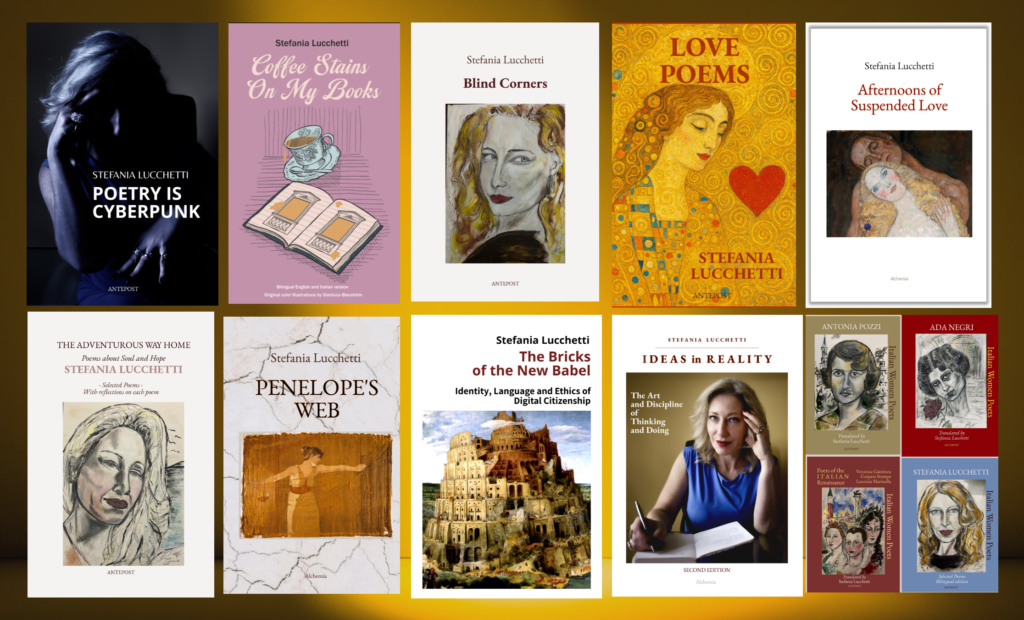
These reflections are also at the origin of my 2025 book Poetry is Cyberpunk. The title expresses my conviction that poetry can become an act of resistance within a reality increasingly shaped by technology: a means of preserving depth of attention, freedom of thought and the integrity of human experience.
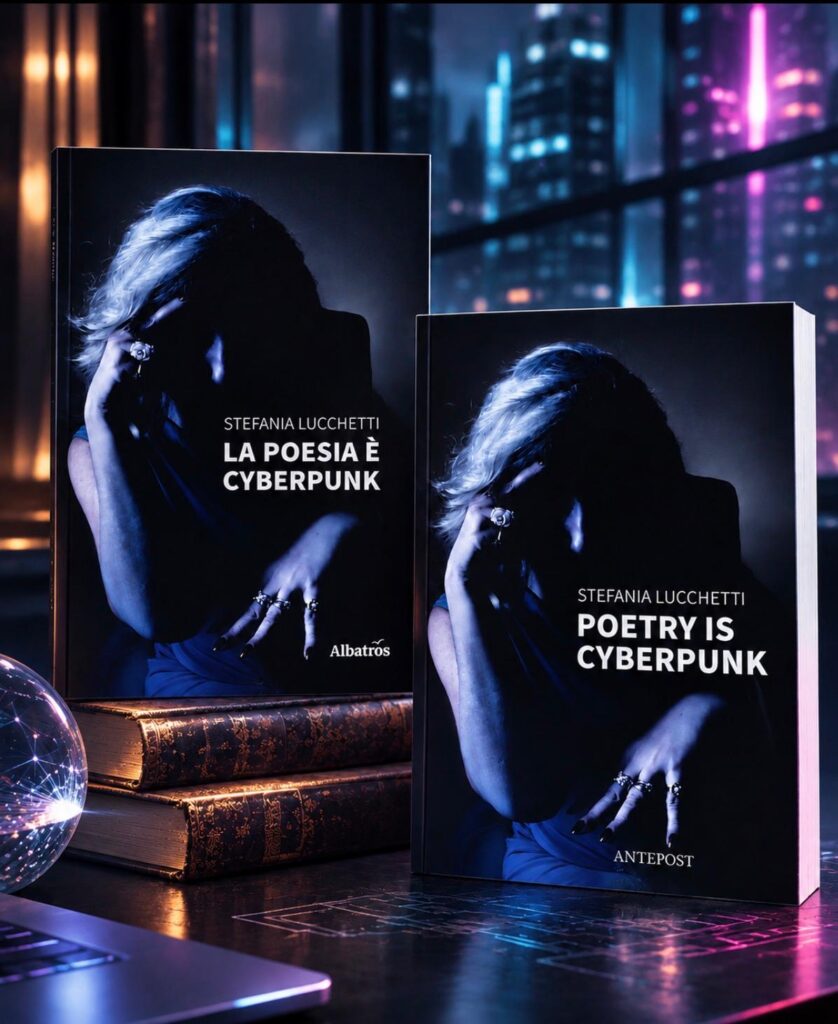
The development of artificial intelligence may change our relationship with many human activities. In the arts, one of its effects may be to remind us why artistic creation matters. Once the initial fascination with automated production has diminished, the human origin of a work becomes newly visible and we can return our attention to the voice, the body, the particular mind of one person: the one individual who has spent a portion of a finite life attempting to create a form for an experience that would otherwise remain unexpressed.