


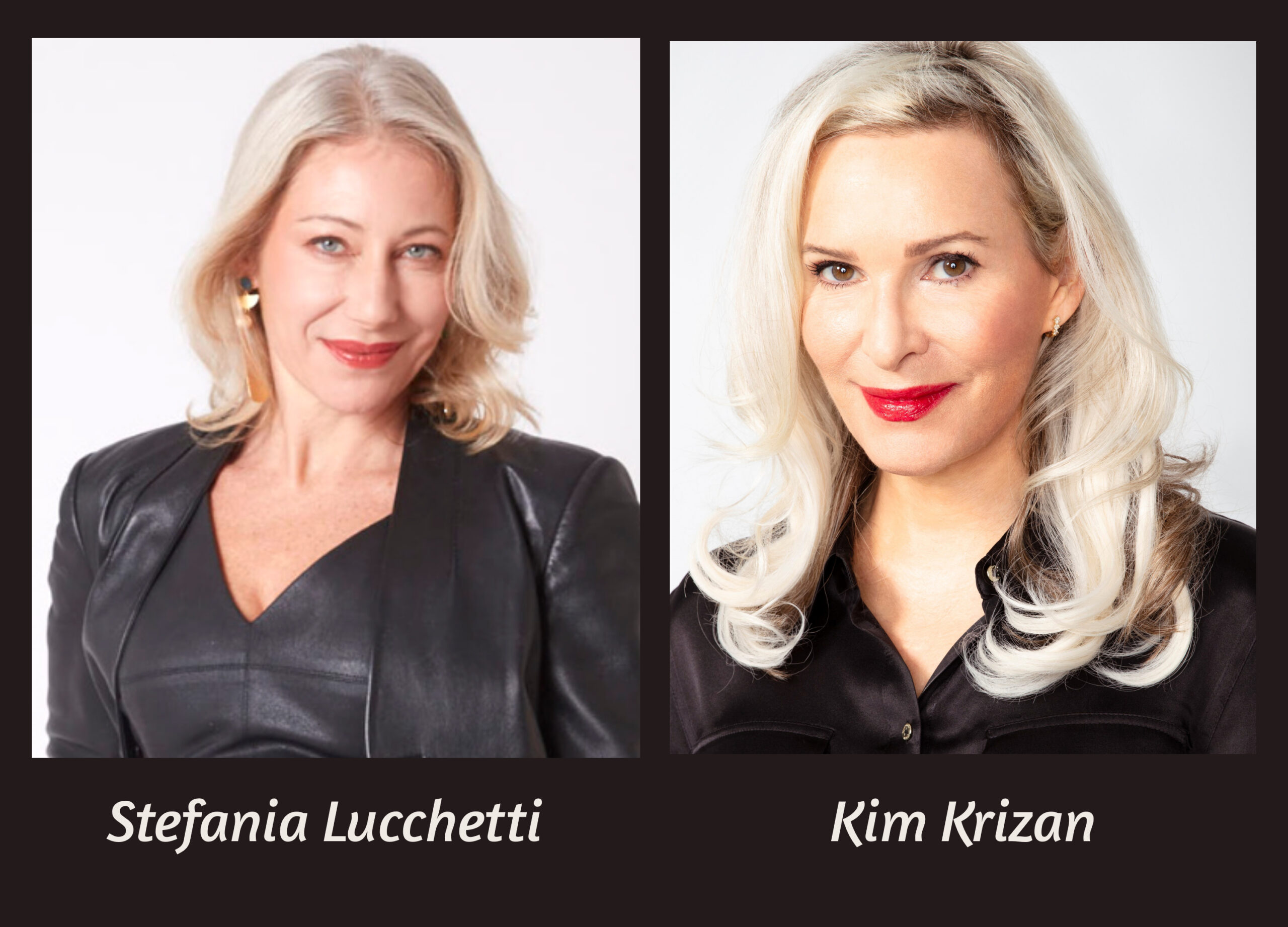
Kim Krizan is the co-writer of the “Before Sunrise” film series. She was nominated for an Academy Award for her work on “Before Sunset”. Krizan also wrote “Spy in the House of Anaïs Nin”, an examination of the diarist’s long-buried letters and papers. Recently, Krizan’s work was seen in Chanel’s 2024/2025 Ready-to-Wear cinematic story starring Brad Pitt and Penelope Cruz. Follow her on Instagram [@kimkrizan](https://www.instagram.com/kimkrizan/).
Stefania Lucchetti interviews Kim Krizan
- Thirty years after Before Sunrise, why do you think Jesse and Céline continue to resonate with new generations of viewers? What is it about their conversations that still feels contemporary?
The meeting and conversations of Jesse and Celine could happen to anybody, anywhere, and at any time in recent history, so I suppose people can project themselves into the situation. We see strangers on the bus or in the grocery store and we thing, “Oh, there’s an interesting-looking person.” It’s a dream to be able to connect with strangers and sometimes it really happens in real life and it’s amazing. But you can’t force these things, because they’re so reliant on chemistry, which is the most wonderful mystery.
- Your writing is often praised for sounding spontaneous, yet the dialogue is extraordinarily precise, articulate and profound. How do you write conversations that feel so natural while carrying so much emotional and philosophical weight?
Honestly, this is the way I think and converse. I’m not crazy about “small talk. I’d rather talk about real things. It’s fun to share ideas and discuss what you’re reading or thinking about. And it’s always changing, because we’re always changing.
- Your master’s thesis focused on Anaïs Nin, a writer and poet deeply interested in identity, intimacy, and self-discovery. Do you see traces of Nin’s influence in your own thinking process, writing and in the characters and relationships you have created?
Oh yes. Nin’s diary must have appealed to me when I found it at age 20 because we were similar people. She was a Spanish girl born in 1903 and I’m an American born in the latter 20th century, but I recognized a familiar soul. I read all of her diaries sequentially and then worked in her house going through her belongings, and I wrote a book about some of my discoveries. 4. The Before films are often described as love stories, but they are equally stories about time. How has your own understanding of love, memory, and the passing of time evolved since you first wrote Before Sunrise? I wrote the first film, Before Sunrise, when I was still a young woman but also looking back at my early twenties when I traveled alone by train. One goes through so much in one’s twenties. They grow really fast and have many dramas — and then in your thirties I suppose you’re trying to solidify your work and love life. After that, many people wonder if they’ve made mistakes and they’re worried about stagnating. But my experience is that your life can take absolutely wonderful turns onto new paths, even when you’re much older. You meet someone who changes your whole outlook or maybe you start a new career or even get on a train. It’s not over until it’s over!
- If you were writing the Before series today, what new themes, technologies, or aspects of modern life would you introduce into Jesse and Céline’s story?
Well, the internet and social media have changed the world so profoundly, for good and for bad, so Jesse and Celine would not have the wistful parting, because they’d keep in touch virtually. In some ways that’s less romantic, but it would also allow them to see one another across space and project onto one another. Scientists say romantic obsession has been fueled by social media.
- Many contemporary films rely on spectacle, while your work places conversation at the centre of the narrative. Do you think audiences are still hungry for films built primarily around ideas and dialogue?
Well, I am. I like drama based around seemingly small psychological shifts. I don’t care about big spectacle at all. For me, the whole world can seem to change with one conversation.
- As both a writer and a creative writing teacher, what is the most common misconception aspiring writers have about writing authentic dialogue?
They overthink it. It’s really a matter of finding the characters within themselves. It’s like method acting, except it happens internally. You can find any character inside by having empathy.
- Your career has moved between film, writing and teaching. Has working across different creative forms changed the way you think about storytelling, or are the essential principles always the same?
The principles are the same. Art and communication are simply giving meaning to thoughts and feelings that are amorphous. This isn’t easy to do. Language in itself is a real feat of abstraction.
- Looking back over your career, is there a scene, a line of dialogue, or even an unwritten idea that still surprises you—that revealed something to you about yourself as a writer?
In Before Sunrise when the Celine character says that it’s all about the attempt to connect — that is really my philosophy in a nutshell and I’m proud of that line.
- Are you currently working on any new projects that you can share with us?
Yes, but I try not to talk about things because it’s like lifting the lid on a pot of boiling rice! It lets the steam out when I want things to cook!
- If you could leave young writers with one piece of advice about finding their own voice in an age increasingly shaped by algorithms, artificial intelligence, and social media, what would it be?
I would tell them to love what they love. They do not have to adopt the enthusiasms of anyone else, like the films someone else likes, have the same opinions as their friends. They have their own souls and they need to stick to their own passions because there is meaning there.