
Technology is a multiplier of individual capabilities
“Man is the measure of all things, of things that are, that they are, and of things that are not, that they are not.”
– Protagoras of Abdera (5th century BC), Fragment DK 80 B1, preserved in Plato’s Theaetetus (152a).
There is an aspect of artificial intelligence that I have been considering recently and that I find particularly compelling: its capacity to amplify individual traits, cognitive habits, and patterns of behaviour that are already present in individuals.
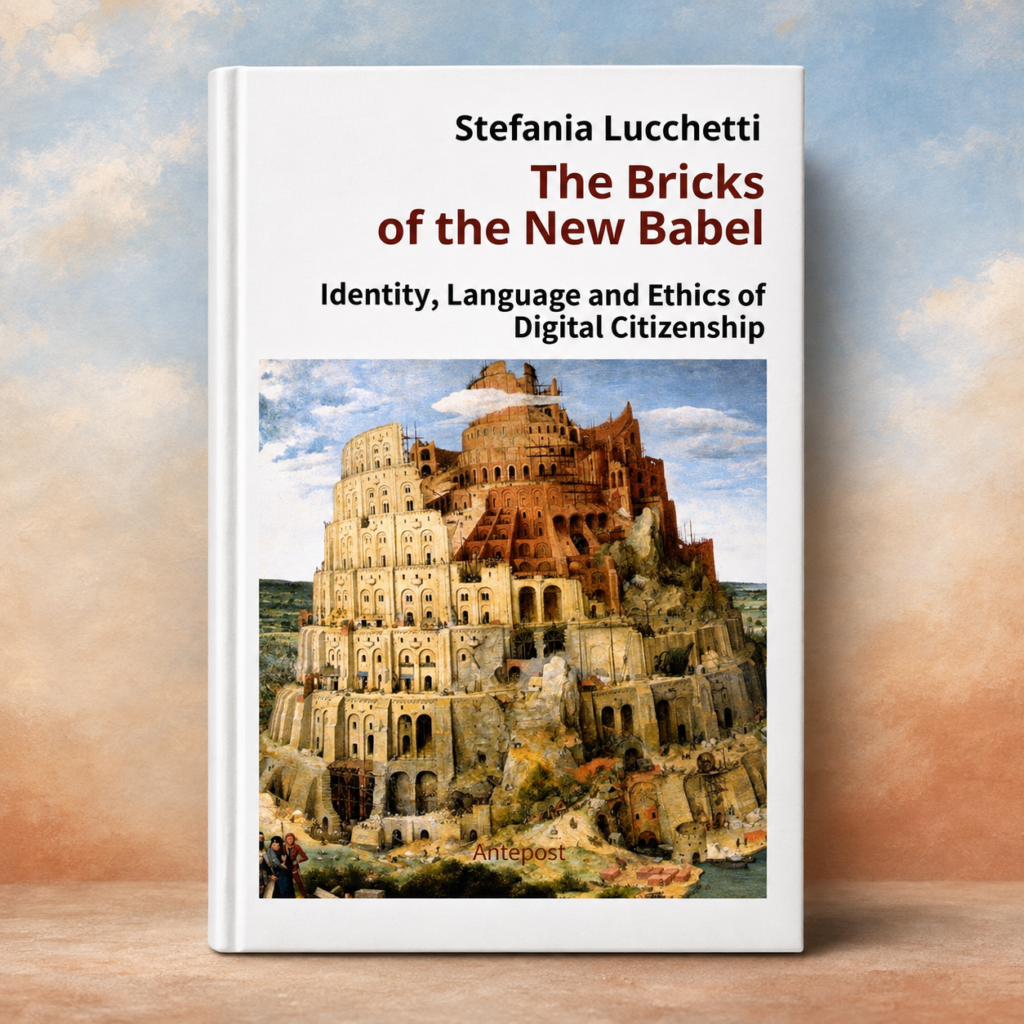
As I have also explored in my essay The Bricks of the New Babel: Identity, Language and Ethics of Digital Citizenship, technology has the power to transform the way we work, communicate, and think. Yet the reverse is equally true: our individual characteristics shape the way we use technological tools and, consequently, the effects that their use produces on the world around us.
Technology acts as a multiplier of individual capabilities, and artificial intelligence is especially powerful in this respect, magnifying our existing inclinations. Someone accustomed to avoiding problems, postponing decisions, or circumventing difficulties may use these tools to reinforce such habits even further. The ability to obtain an immediate answer, a document, or an apparently complete solution reduces the need to engage directly with the complexity of a problem.
Conversely, those who have developed a rigorous approach to their work over the years, grounded in precision, verification, and intellectual depth, now have access to tools that can considerably extend the scope of their activities. The speed of processing makes it possible to examine larger quantities of information, explore alternative hypotheses, identify connections, and devote more time to those aspects that require independent judgement.
In my view, the difference in how AI is used therefore lies not only in the technical skills required to operate these systems, but also in the methods and intellectual dispositions that each individual brings to the interaction.
I have noticed, for instance, a growing tendency to produce documents through successive rounds of automated summarisation and reworking. Summaries of summaries, presentations derived from texts that have never been read in full, analyses generated from information whose reliability has not been established. These materials are then circulated and used as though they were the outcome of a genuine process of intellectual examination. Those who receive them often find themselves having to reconstruct the missing steps, verify the sources, and determine which conclusions are sound and which are merely expressed in convincing language.
This gives rise to a curious phenomenon: the automation of certain cognitive tasks can result in the transfer of intellectual labour from one person to another, rather than in any real reduction of that labour.
The ease with which content can now be produced is also changing the signals by which we have traditionally recognised competence. A sophisticated, well-written, and formally persuasive document is no longer, in itself, reliable evidence that the person presenting it understands its contents. It therefore becomes increasingly difficult to distinguish the apparent quality of an outcome from the quality of the process through which it was produced.
I find this particularly relevant in professional environments, where the ability to generate complex materials in a matter of moments can conceal substantial differences in people’s capacity to analyse, evaluate, and assume responsibility for them.
There is, however, another dimension to this phenomenon that I consider equally significant.
Artificial intelligence provides access to processing capabilities that, until recently, would have been largely beyond the reach of a single individual. The relationship between human capabilities and technological capabilities is undergoing a profound transformation.
This raises questions about the development of our own cognitive faculties.
Having more powerful tools at our disposal does not automatically lead to a corresponding development in our ability to use them. Indeed, certain mental functions may be exercised less frequently precisely as technology becomes capable of performing them more quickly. Other abilities, meanwhile, become increasingly valuable: asking pertinent questions, recognising an error even when it is convincingly expressed, establishing connections across disciplines, assessing the consequences of a decision, and distinguishing meaningful information from what is irrelevant.
Our interaction with artificial intelligence can help cultivate these faculties or diminish the opportunities we have to exercise them. Much depends on the relationship each of us establishes with the technology.
I find it interesting to observe how the same technology can accompany two such different processes: the expansion of an individual’s intellectual and practical capabilities, and the reinforcement of habits that restrict independent thought. In this sense, artificial intelligence does not operate upon abstract, interchangeable individuals. It interacts with people who have different histories, methods, inclinations, and abilities, and its effects evolve through this interaction over time.
Its impact cannot be understood solely by examining what these systems are capable of doing. We must also consider what happens to people as they learn to live and work alongside increasingly sophisticated technological capabilities.
The availability of artificial intelligence does not necessarily entail either an increase or a decline in human intelligence. The relationship between the two will also depend on the faculties we continue to exercise, those we choose to develop, and those we gradually entrust to machines.
Man remains the measure of all things.
(c) Stefania Lucchetti 2026
All rights reserved – this article can be mentioned, referenced and linked to but not copied.