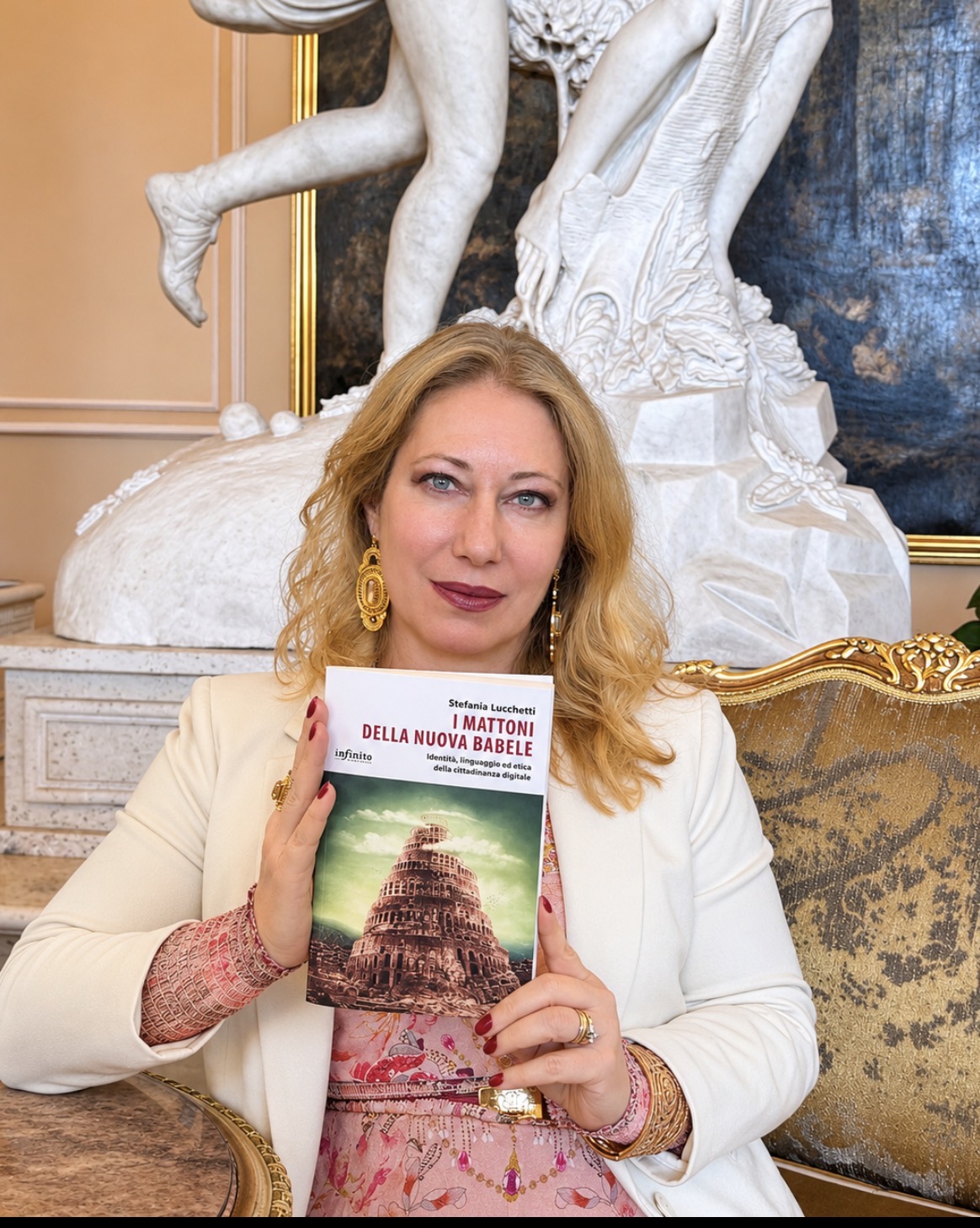
Stefania Lucchetti with one of her essays
(c) Stefania Lucchetti 2026 – All rights reserved. This article can be mentioned, referenced and linked to but not copied.
When we think of the history of philosophy, names such as Plato, Aristotle, Descartes, Kant, or Nietzsche immediately come to mind. Almost all of them are men. From this, there arises the culturally and socially shaped perception that there were no women philosophers. Yet, much as with women poets, their apparent absence has far more to do with philosophical textbooks and the traditional canon than with the actual history of thought.
Women have engaged in philosophical inquiry since antiquity, even though their contributions have often been overlooked or marginalized. In the Symposium, Plato introduces the figure of Diotima of Mantinea, presenting her as Socrates’ teacher in the philosophy of love. Whether she was a historical person or a literary creation, her presence testifies to the importance Plato attributed to a female voice in philosophical reflection. Alongside this figure we find historically documented thinkers such as Hypatia of Alexandria, a central figure of the Neoplatonic school of Alexandria and one of the most distinguished intellectuals of Late Antiquity. In later centuries we encounter authors and philosophers such as Christine de Pizan, Mary Wollstonecraft, Hannah Arendt, and Simone de Beauvoir. Their marginalization resulted not only from women’s exclusion from higher education, universities, and academic institutions, but also from the ways in which the philosophical canon was constructed and transmitted over the centuries.
Women philosophers have also played an important role in bringing to the center of philosophical inquiry subjects that had long remained relatively marginal within the dominant tradition. Among these are the family, relationships of care, motherhood, interdependence, and everyday life. While much of the philosophical tradition has focused on knowledge, politics, justice, and universal principles, many women thinkers have shown that the domestic sphere and relationships of care are equally fundamental for understanding ethics, freedom, justice, and human relationships. Contemporary authors such as Carol Gilligan, whose work profoundly influenced the ethics of care, and philosophers such as Martha Nussbaum have drawn attention to relational themes – including vulnerability and interdependence – as central concerns of moral philosophy.
This is not to suggest that women philosophers speak only about the family, nor that men have ignored these subjects altogether. Rather, women’s distinct historical experience has often brought to light questions that remained at the margins of mainstream philosophy for centuries. Rediscovering women philosophers, therefore, is not simply a matter of adding a few female names to an already established list. It requires expanding our understanding of what philosophy itself has been—and what it can be.
The history of philosophy is not, after all, the history of an exclusively male mode of thought. It is the history of a tradition that, for a long time, rendered many of its female protagonists less visible. Recovering the voices of women philosophers today means restoring an essential part of humanity’s intellectual heritage and recognizing that philosophy has always been richer, more diverse, and more plural than the traditional canon has led us to believe.
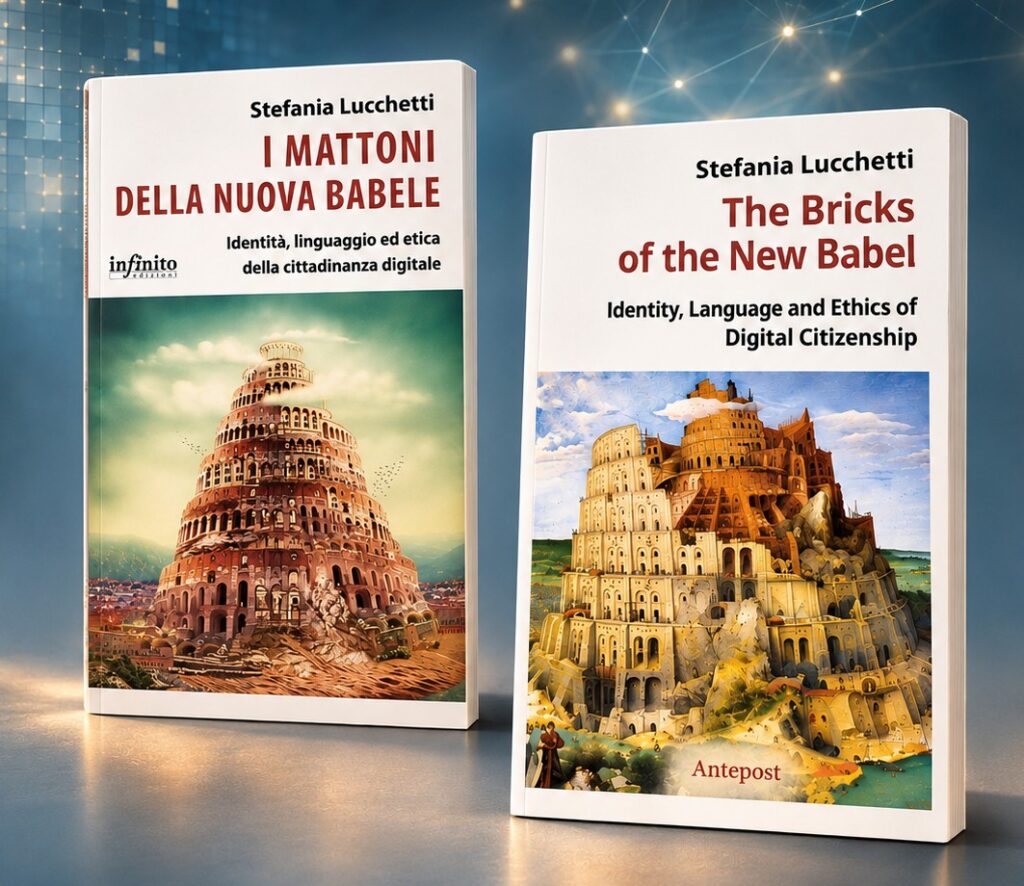
The Bricks of the New Babel: Identity, Language and Ethics of Digital Citizenship
is the seminal essay about DIGITAL CITIZENSHIP written by award-winning poet, philosopher and technology lawyer Stefania Lucchetti in 2025.
“To be citizens of the digital world, Stefania Lucchetti argues, does not simply mean knowing the rules of the internet, but consciously inhabiting a shared mental space − choosing how to be present, with what language, with what gaze.”
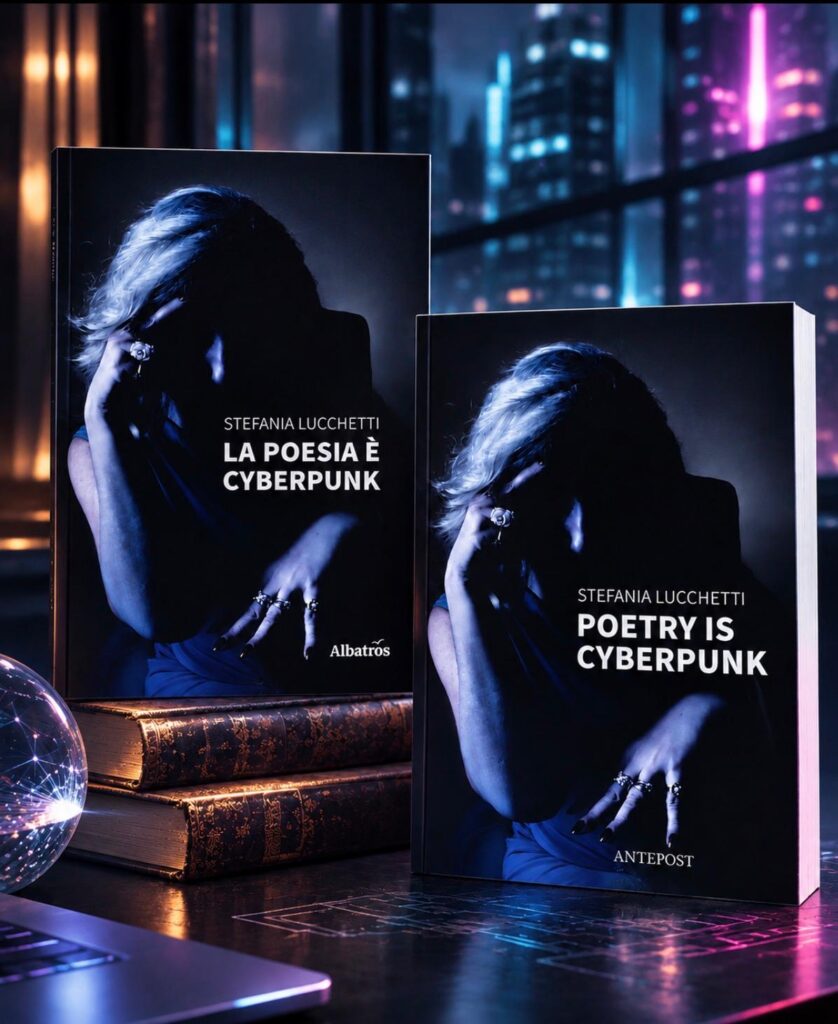
A reflection on poetry, technology and technological humanism is at the origin of Stefania Lucchetti’s 2025 book Poetry is Cyberpunk. The title expresses Lucchetti’s conviction that poetry can become an act of resistance within a reality increasingly shaped by technology: a means of preserving depth of attention, freedom of thought and the integrity of human experience.
STEFANIA LUCCHETTI
Discover Stefania Lucchetti’s books on Amazon
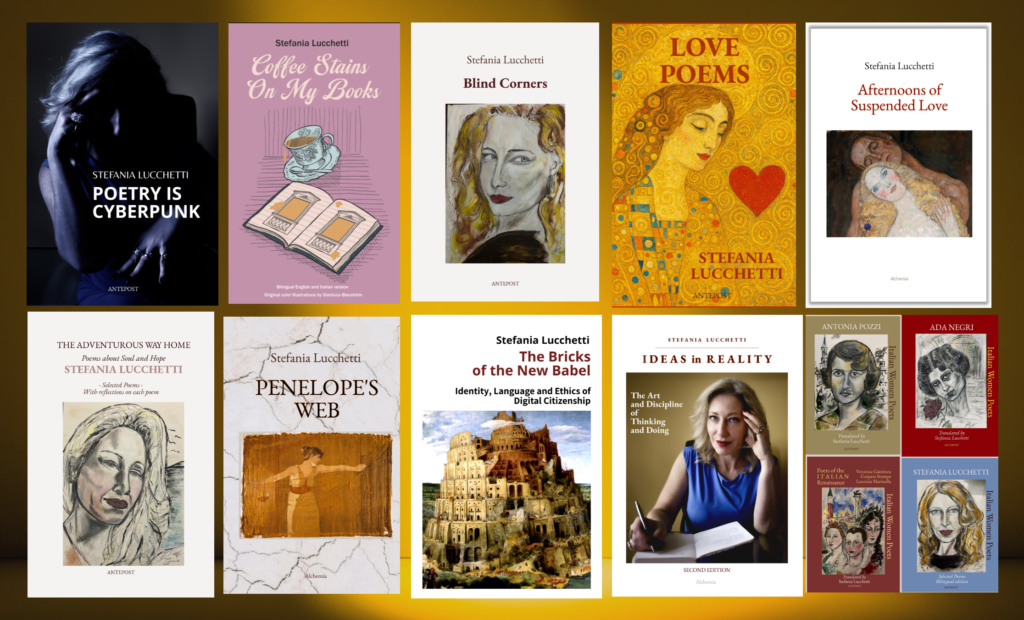
Stefania Lucchetti is an Italian essayist and award-winning poet. She has authored several poetry collections and philosophy books on technological humanism and the impact of AI. Lucchetti is among the most widely read contemporary Italian poets worldwide as she is bilingual (Italian-English) and writes in both languages.
Born in 1975 in Verona, Italy, she saw her first poetry published at 13 while living in the US with her family, marking the beginning of a long journey as wordsmith. She studied classics at Liceo Classico in Gorizia and then went on to obtain a JD in law from Università Cattolica del Sacro Cuore in Milan in 1999, with a thesis on the liberalisation of the telecommunications sector. Among the first Italian lawyers to specialize in telecommunications and new technologies, Lucchetti advised several technology pioneers over the years. She was also the first Italian lawyer to qualify as a solicitor in Hong Kong, after qualifying also in the UK. To enrich her knowledge and writing depth, she also obtained a second master’s degree in clinical psychology.
Stefania Lucchetti is author of several poetry collections and philosophical works on technological humanism. She is known for poetry of lyrical refinement and contemporary relevance. She has also translated and curated collections dedicated to several Italian women poets, among which Antonia Pozzi, Ada Negri, Vittoria Pompilj Aganoor, Gaspara Stampa, Veronica Gàmbara, Lucrezia Marinella, Vittoria Colonna.
CONTEMPORARY POETRY
ITALIAN WOMEN POETS
CONTEMPORARY PHILOSOPHERS