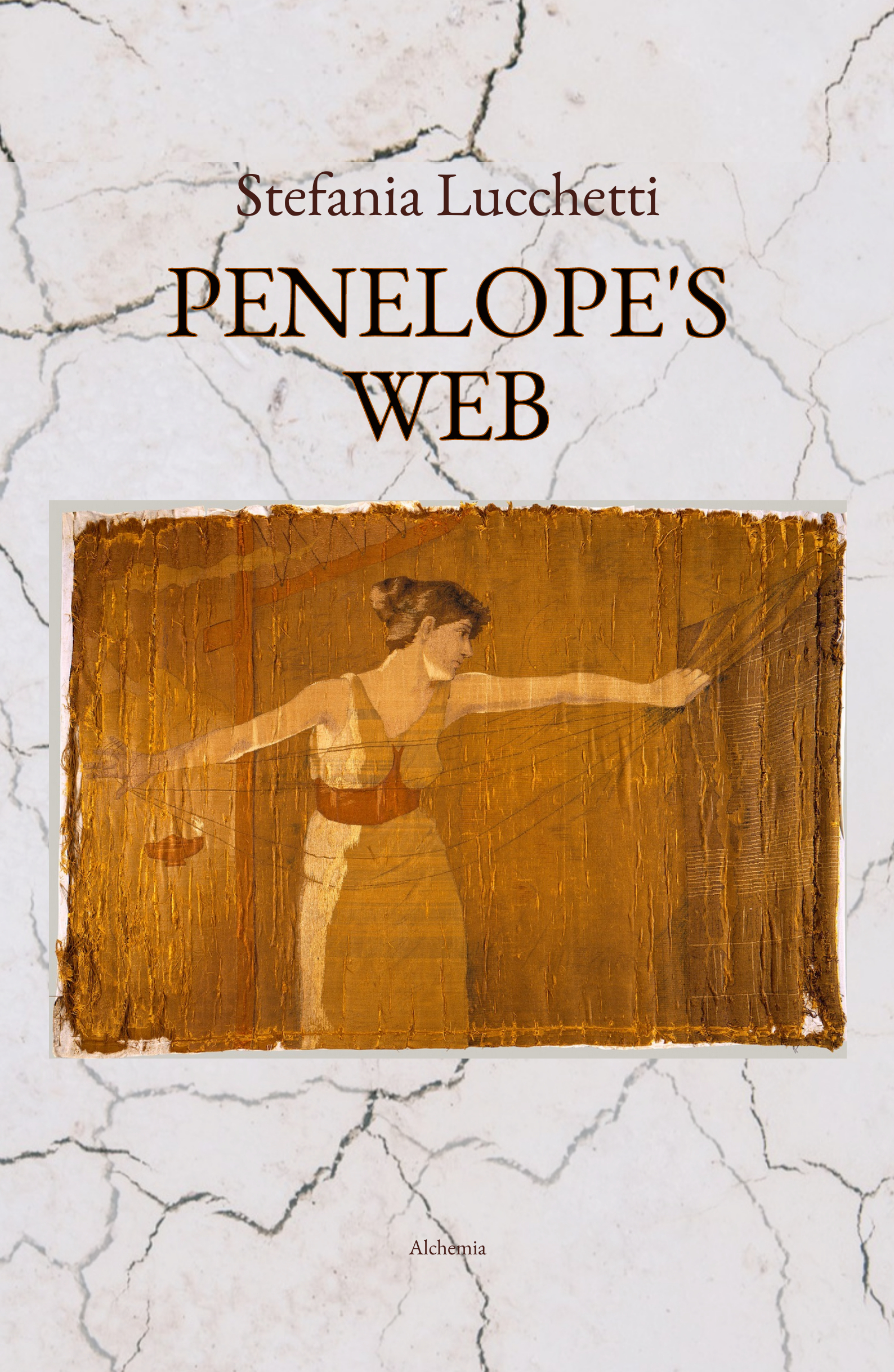
BUY “Penelope’s Web” by Stefania Lucchetti on Amazon
The anticipation surrounding The Odyssey, Christopher Nolan’s new epic inspired by Homer’s poem, has reignited a debate that extends far beyond the world of cinema. The cast includes Matt Damon as Odysseus, Anne Hathaway as Penelope, Tom Holland as Telemachus, Zendaya as Athena, and Lupita Nyong’o as Helen. During the film’s promotional tour, actress Lupita Nyong’o remarked that she would have liked to ask Homer why he devoted so little space to women in the Odyssey.
It is an observation that reflects a contemporary sensibility, yet one that deserves to be measured against the text itself. If we simply count lines or pages, the female characters may indeed appear secondary. But if we look at the architecture of the poem, the opposite emerges: it is the women who determine the story’s decisive turning points.
Athena is the true architect of Odysseus’ return. She persuades Zeus that the hero must be released, protects him, guides him, supports Telemachus, and orchestrates the final reunion. Circe is far more than the enchantress who bewitches men: she is the one who directs Odysseus to the Underworld and enables him to consult Tiresias, giving him the knowledge he needs to complete his journey. Calypso, by keeping him on her island for years and even offering him immortality, controls the very rhythm of the narrative. Nausicaa rescues the shipwrecked hero when all seems lost. And Penelope, far from being a passive figure, preserves the kingdom through the stratagem of the loom, withstands the suitors, and subjects Odysseus to the ultimate test before acknowledging his identity. It is thanks to her intelligence, determination, and long-term vision that, upon his return, he is restored as king rather than reduced to a dispossessed beggar.
The Odyssey was composed within a deeply patriarchal society, yet Homer created female characters endowed with remarkable narrative agency. They are neither decorative presences nor rewards for the hero. They shape destiny, preserve knowledge, impose trials, and safeguard both political order and the continuity of the family. In other words, they make the story happen.
Helen herself, although primarily a figure of the Iliad, remains one of the most discussed characters in the classical tradition. The celebrated description of her as “the face that launched a thousand ships” is not Homer’s, but Christopher Marlowe’s. It appears in The Tragical History of Doctor Faustus, written in the late sixteenth century. The line has become one of the most famous in English literature, entering the language as a proverbial expression for incomparable beauty capable of inspiring overwhelming passion. Yet it is still frequently – and incorrectly – attributed to Homer.
This confusion is revealing. Every age has reinvented Helen according to its own values, portraying her in turn as the embodiment of beauty, desire, guilt, freedom, or victimhood. Myths do not remain static; they endure precisely because they invite continual reinterpretation.
If, for Christopher Marlowe, Helen was “the face that launched a thousand ships” today she continues to launch countless others – not fleets bound for Troy, but debates, interpretations, and intellectual “wars.” Nearly three thousand years later, she still divides opinion, fascinates us, and challenges our imagination. That is the enduring power of mythology: it never ceases to generate new readings and new questions without ever exhausting their meaning.
One of my favorite literary tributes to Helen is Dante’s description of her in Inferno, Canto V: “per cui tanto reo tempo si volse”—”for whom such evil times were set in motion.”
It is the very line I echo in my own poem, Helen included in my selected poems collection Penelope’s Web
Read also: About Penelope